



[
{
“@context”: “https://schema.org”,
“@type”: “BlogPosting”,
“headline”: “The Complete Guide to Natural Appetite Suppressants in the UK for Sustainable Fullness”,
“description”: “Explore natural appetite suppressant UK options like konjac glucomannan. Learn UK food law facts, daily 3g dosing routines, and high-fibre meal strategies.”,
“url”: “https://www.naturalbeautyslimming.com/blog/natural-appetite-suppressant-uk-guide/”,
“datePublished”: “2026-10-28”,
“dateModified”: “2026-11-02”,
“inLanguage”: “en-GB”,
“author”: {
“@type”: “Person”,
“name”: “Nicola Bird”,
“jobTitle”: “Founder & Wellness Formulator, Natural Beauty Slimming”,
“description”: “Nicola Bird is the founder of Natural Beauty Slimming, specialising in UK-compliant botanical food supplements, soluble dietary fibres, and sustainable weight management routines.”,
“image”: “https://www.naturalbeautyslimming.com/wp-content/uploads/2026/09/nicola.jpg”,
“url”: “https://www.naturalbeautyslimming.com/about-us/”
},
“publisher”: {
“@type”: “Organization”,
“name”: “Natural Beauty Slimming”,
“url”: “https://www.naturalbeautyslimming.com/”,
“logo”: {
“@type”: “ImageObject”,
“url”: “https://www.naturalbeautyslimming.com/wp-content/uploads/2026/09/nbs-logo.png”
}
},
“mainEntityOfPage”: {
“@type”: “WebPage”,
“@id”: “https://www.naturalbeautyslimming.com/blog/natural-appetite-suppressant-uk-guide/”
},
“about”: [
{
“@type”: “Thing”,
“name”: “Glucomannan”,
“sameAs”: “https://en.wikipedia.org/wiki/Glucomannan”
},
{
“@type”: “Thing”,
“name”: “Dietary fibre”,
“sameAs”: “https://en.wikipedia.org/wiki/Dietary_fiber”
}
],
“mentions”: [
{
“@type”: “Product”,
“@id”: “https://www.naturalbeautyslimming.com/product/appetite-control-capsules/#product”,
“name”: “Appetite Control Capsules”,
“description”: “UK-compliant konjac glucomannan food supplement capsules designed to support an energy-restricted diet.”,
“url”: “https://www.naturalbeautyslimming.com/product/appetite-control-capsules/”,
“offers”: {
“@type”: “Offer”,
“price”: “36.00”,
“priceCurrency”: “GBP”,
“availability”: “https://schema.org/InStock”,
“url”: “https://www.naturalbeautyslimming.com/product/appetite-control-capsules/”
}
},
{
“@type”: “Product”,
“@id”: “https://www.naturalbeautyslimming.com/product/ultimate-appetite-reducer-bundle/#product”,
“name”: “Ultimate Appetite Reducer Bundle”,
“description”: “Structured daytime wellness bundle pairing konjac glucomannan capsules with daily support patches.”,
“url”: “https://www.naturalbeautyslimming.com/product/ultimate-appetite-reducer-bundle/”
}
]
},
{
“@context”: “https://schema.org”,
“@type”: “BreadcrumbList”,
“itemListElement”: [
{
“@type”: “ListItem”,
“position”: 1,
“name”: “Home”,
“item”: “https://www.naturalbeautyslimming.com/”
},
{
“@type”: “ListItem”,
“position”: 2,
“name”: “Blog”,
“item”: “https://www.naturalbeautyslimming.com/blog/”
},
{
“@type”: “ListItem”,
“position”: 3,
“name”: “Natural Appetite Suppressant UK Guide”,
“item”: “https://www.naturalbeautyslimming.com/blog/natural-appetite-suppressant-uk-guide/”
}
]
},
{
“@context”: “https://schema.org”,
“@type”: “FAQPage”,
“mainEntity”: [
{
“@type”: “Question”,
“name”: “What should you consider when researching weight management supplements in the UK?”,
“acceptedAnswer”: {
“@type”: “Answer”,
“text”: “Under UK food law and the Great Britain Nutrition and Health Claims (NHC) Register, food supplements are categorised as foods and cannot legally claim to medicinally suppress hunger. Shoppers should look for authorised ingredients with verified physical properties, such as konjac glucomannan, which contributes to weight loss in the context of an energy-restricted diet when taken at a daily intake of 3 g (three 1 g doses before main meals with 1 to 2 glasses of water).”
}
},
{
“@type”: “Question”,
“name”: “How does glucomannan behave when consumed with liquid?”,
“acceptedAnswer”: {
“@type”: “Answer”,
“text”: “Glucomannan is a water-soluble polysaccharide derived from the konjac root (Amorphophallus konjac) that exhibits high viscosity when hydrated. Upon contact with water, the fibre binds to fluid molecules and swells into a gentle, viscous gel matrix. Because of this high water-binding capacity, UK safety guidance requires taking each 1 g serving with 250 ml to 500 ml (1 to 2 full glasses) of water to ensure smooth passage into the stomach.”
}
},
{
“@type”: “Question”,
“name”: “When should you take dietary fibre supplements for best results?”,
“acceptedAnswer”: {
“@type”: “Answer”,
“text”: “You should take soluble dietary fibre supplements such as glucomannan 15 to 30 minutes before breakfast, lunch, and dinner. Taking each 1 g dose alongside 250 ml to 500 ml of water shortly before eating gives the fibre time to hydrate thoroughly in the stomach prior to your meal. Always follow the manufacturer instructions on the packaging and maintain steady water intake throughout the day.”
}
},
{
“@type”: “Question”,
“name”: “What everyday UK foods provide high amounts of natural soluble fibre?”,
“acceptedAnswer”: {
“@type”: “Answer”,
“text”: “Everyday British foods rich in natural soluble fibre include porridge oats (approx. 4 g of beta-glucan rich fibre per 50 g serving), pearl barley, green lentils, chickpeas, black beans, chia seeds, flaxseeds, apples, and root vegetables such as carrots and parsnips. Pairing these whole foods with lean proteins supports the NHS-recommended 30 g daily dietary fibre target.”
}
},
{
“@type”: “Question”,
“name”: “Why is drinking plenty of water important when taking fibre supplements?”,
“acceptedAnswer”: {
“@type”: “Answer”,
“text”: “Drinking plenty of water is essential because concentrated soluble fibres rely on fluid to hydrate safely and travel smoothly down the oesophagus into the stomach. Consuming 250 ml to 500 ml of water per 1 g serving prevents swallowing difficulties or oesophageal blockages, supports comfortable digestion, and assists normal bowel transit.”
}
},
{
“@type”: “Question”,
“name”: “What precautions should you take when using konjac fibre supplements?”,
“acceptedAnswer”: {
“@type”: “Answer”,
“text”: “Always swallow konjac glucomannan capsules intact with 1 to 2 full glasses of water (250 ml to 500 ml) and never take them dry or immediately before lying down. Individuals with swallowing difficulties (dysphagia) or structural narrowing of the oesophagus or digestive tract should avoid konjac supplements. If you take oral prescription medication, leave a 1 to 2 hour window between your medication and fibre supplements, and consult your GP or pharmacist.”
}
},
{
“@type”: “Question”,
“name”: “Are dietary fibre supplements safe for long-term daily use?”,
“acceptedAnswer”: {
“@type”: “Answer”,
“text”: “Soluble dietary fibre supplements are generally well-tolerated for daily use by healthy adults when taken according to label instructions alongside adequate water. Introducing supplemental fibre gradually over 5 to 7 days helps minimise temporary digestive bloating. Pregnant or breastfeeding women, and individuals with chronic medical conditions, should consult their GP or a registered dietitian before starting supplementation.”
}
},
{
“@type”: “Question”,
“name”: “How can you integrate fibre supplements into a healthy weight management plan?”,
“acceptedAnswer”: {
“@type”: “Answer”,
“text”: “Integrate fibre supplements by anchoring three 1 g pre-meal doses to an energy-restricted diet, structured meal times, and regular physical activity. Combine pre-meal supplementation with plates built around 50% non-starchy vegetables, 25% lean protein, and 25% wholegrain carbohydrates so food supplements act as a structured support to whole-food nutrition rather than a replacement.”
}
}
]
}
]
The complete guide to natural appetite suppressants in the UK for sustainable fullness
Last updated: · Fact-checked against the GB Nutrition & Health Claims Register

Nicola Bird · Founder & Wellness Formulator, Natural Beauty Slimming
Nicola specialises in UK-compliant botanical food supplements, soluble dietary fibres, and practical daily routines that support sustainable weight management alongside whole-food nutrition.
When searching for a natural appetite suppressant in the UK, consumers should know that UK food law prohibits food supplements from making medicinal appetite-blocking claims. Instead, the Great Britain Nutrition and Health Claims (NHC) Register authorises specific physical dietary fibres, most notably konjac glucomannan. In the context of an energy-restricted diet, glucomannan contributes to weight loss when consumed at a total daily intake of 3 g (taken as three 1 g doses, each with 1 to 2 glasses of water, before each main meal).
Extracted from the tuber of the Asian konjac plant (Amorphophallus konjac), glucomannan is a water-soluble polysaccharide with one of the highest viscosity ratings of any natural dietary fibre. When taken with 250 ml to 500 ml of water, the fibre binds to fluid in the digestive tract and swells into a gentle, viscous gel matrix. This physical expansion occupies volume inside the stomach prior to eating, making pre-meal hydration a vital part of any fibre supplementation routine.
 Achieving lasting results requires pairing pre-meal soluble fibre with high-protein whole foods, structured hydration checkpoints, and consistent sleep and exercise habits. Below, we examine how UK-regulated dietary fibres work physically, how they compare to everyday high-fibre foods, and how to structure your daily schedule for steady daytime and evening satisfaction.
 How soluble dietary fibres support physical fullness (UK evidence & comparison)
Soluble dietary fibres support mealtime management through physical mechanics rather than pharmacological stimulation. Unlike stimulant-based products, plant fibres such as konjac glucomannan, oat beta-glucans, and psyllium husk are non-digestible carbohydrates that bind with water in the stomach to form a thick, gel-like substance. This physical bulk gently occupies space in the stomach before your main course arrives.
To help you compare the primary dietary fibres available in the UK, the table below outlines their botanical sources, physical behaviour in liquid, and official status under Great Britain nutrition legislation:
| Soluble Fibre Type | Primary Food / Botanical Source | Physical Mechanism in Water | Authorised GB Health Claim & Daily Dose |
|---|---|---|---|
| Konjac Glucomannan | Konjac root tuber (Amorphophallus konjac) | Extremely high water-binding capacity; swells rapidly into a dense, viscous gel. | Contributes to weight loss in an energy-restricted diet (3 g daily: three 1 g doses before meals with 1-2 glasses of water). |
| Beta-Glucans | Porridge oats, oat bran, and pearl barley | Forms a moderate-viscosity gel in the small intestine during digestion. | Contributes to the maintenance of normal blood cholesterol levels (3 g daily) and lowers post-meal blood glucose rise. |
| Psyllium Husk | Plantago ovata seed husks | Absorbs water to form a mucilaginous gel that resists fermentation in the gut. | Used primarily as a bulk-forming fibre to support regular bowel transit alongside ample daily hydration. |
| Pectin & Inulin | Apples, citrus peel, chicory root, and leeks | Dissolves in water to slow gastric emptying and feed beneficial gut bacteria. | Chicory inulin contributes to normal bowel function by increasing stool frequency (12 g daily). |
Because konjac glucomannan possesses a significantly higher viscosity than everyday culinary fibres, strict attention to hydration is essential. Consuming 250 ml to 500 ml of water with every 1 g dose ensures the capsule clears the oesophagus smoothly and hydrates comfortably within the stomach.
A step-by-step daily hydration and glucomannan schedule
To achieve the authorised 3 g daily intake of glucomannan safely and effectively, you should take a 1 g serving 15 to 30 minutes before your three main meals, always accompanied by one to two large glasses of water (250 ml to 500 ml). Spacing your intake across breakfast, lunch, and dinner ensures consistent pre-meal preparation and steady daytime hydration.
When should you take natural fibre supplements for best results?
Taking your supplement 15 to 30 minutes before sitting down to eat gives the soluble fibre sufficient time to dissolve and form its gel matrix in the stomach before food arrives. Following a fixed timetable removes daily guesswork and keeps fluid intake on track:
| Time Window | Daily Routine Action | Fluid & Dosage Target |
|---|---|---|
| 07:30 (Upon Waking) | Morning hydration & daily wellness patch application to clean, dry skin. | 250 ml fresh water |
| 08:00 (Pre-Breakfast) | First glucomannan serving taken 15 to 30 minutes before breakfast. | 1 g glucomannan + 250 ml to 500 ml water |
| 12:30 (Pre-Lunch) | Second glucomannan serving taken 15 to 30 minutes before your midday meal. | 1 g glucomannan + 250 ml to 500 ml water |
| 15:30 (Mid-Afternoon) | Afternoon hydration checkpoint to prevent mistaking thirst for snack cravings. | 250 ml water or herbal infusion |
| 18:00 (Pre-Dinner) | Third and final glucomannan serving taken 15 to 30 minutes before your evening meal. | 1 g glucomannan + 250 ml to 500 ml water |
Featured Daily Supplement
Appetite Control Capsules (Konjac Glucomannan)
Pre-measured plant fibre capsules formulated to deliver your three 1 g pre-meal servings as part of an energy-restricted diet.
Structuring balanced UK meals with protein and whole-food fibre
Pre-meal fibre supplements work best when paired with nutrient-dense meals that support the NHS-recommended 30 g daily dietary fibre target. Because the average UK adult currently consumes approximately 18 g to 20 g of fibre per day, closing that 10 g gap with whole foods alongside your 3 g glucomannan routine creates a reliable nutritional foundation.
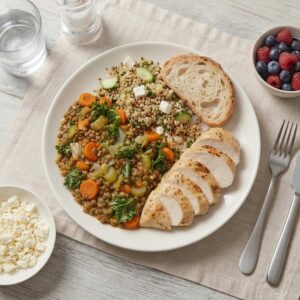
A practical method for building balanced, energy-restricted meals is the 50/25/25 plate framework. Divide your plate into three clear zones at breakfast, lunch, and dinner:
- 50% Non-starchy, fibrous vegetables: Fill half your plate with high-volume British staples such as steamed tenderstem broccoli, savoy cabbage, spinach, roasted carrots, parsnips, or crisp mixed salad leaves (contributing 4 g to 6 g of intrinsic fibre per meal).
- 25% Lean, high-satiety protein (25 g to 35 g protein per meal): Dedicate a quarter of your plate to grilled chicken breast, turkey, cod or haddock fillets, tinned tuna in spring water, eggs, low-fat cottage cheese, firm tofu, or red lentils.
- 25% Complex, slow-release carbohydrates: Complete the plate with wholegrain porridge oats, pearl barley, brown basmati rice, wholemealseeded bread, or a baked jacket potato eaten with the skin on.
Combining dietary protein with whole-food fibre slows down digestion naturally, preventing the sharp mid-morning and mid-afternoon energy dips that trigger impulsive reaching for biscuits or crisps.
Mindful eating routines to manage late-evening cravings
Late-evening snacking is rarely caused by a genuine calorie deficit; instead, it is usually triggered by daytime meal skipping, mild dehydration, accumulated decision fatigue, or habitual sofa cues. Learning to distinguish between gradual physiological hunger and sudden hedonic cravings allows you to respond thoughtfully rather than automatically visiting the kitchen cupboard.
Physiological hunger builds progressively over four to five hours, produces physical stomach signals, and can be satisfied by a nutritious meal such as vegetables and protein. Habitual evening cravings appear abruptly, fixate on specific sugary or salty ultra-processed snacks, and often peak when you sit down to watch television after work.
Use these five evidence-informed behavioural habits to calm evening grazing:
- Use the 15-minute hydration pause: Drink a 250 ml glass of water or warm peppermint tea and wait 15 minutes before deciding if you genuinely need an evening snack.
- Pace your evening meal (the 20-minute rule): Endocrine fullness signals such as cholecystokinin (CCK) and peptide YY (PYY) take roughly 20 minutes to travel from the gut to the brain. Place your knife and fork down between bites so your body registers satisfaction on time.
- Remove screen distractions at dinner: Eating while scrolling on a mobile phone or watching television blunts visual memory of the meal, increasing the likelihood of snacking an hour later.
- Portion snacks in the kitchen: Never eat directly from sharing bags or multipacks; serve a single measured portion onto a small side plate.
- Anchor a non-food wind-down cue: Brush your teeth or brew a mug of chamomile tea 60 minutes after dinner to signal to your brain that the kitchen is closed for the night.
How do you build a consistent daily supplement habit?
Habit consistency relies on environmental cues rather than willpower alone. Keep your glucomannan capsule organiser directly beside your kitchen kettle, water filter jug, or dining table so your 15-to-30-minute pre-meal dose is visible whenever you prepare a drink before eating.
Many members of our UK community pair our Appetite Control Capsules with the Ultimate Appetite Reducer Bundle to keep their morning, afternoon, and evening wellness routines structured and simple to follow.
Why do sweet cravings peak late at night?
Evening sugar cravings typically spike when daytime meals are too low in protein or complex carbohydrates, or when sleep deprivation elevates ghrelin (the hunger-signalling hormone) while lowering leptin. When mental fatigue sets in after a long workday, the brain seeks rapid dopamine and glucose rewards. Addressing the root cause by eating balanced daytime meals and protecting a 7 to 8 hour sleep window reduces nighttime sugar urges substantially.
Frequently asked questions
Below are clear, evidence-based answers to common questions regarding UK food supplement regulations, konjac glucomannan dosage, hydration safety, and everyday high-fibre nutrition.
What should you consider when researching weight management supplements in the UK?
Under UK food law and the Great Britain Nutrition and Health Claims (NHC) Register, food supplements are categorised as foods and cannot legally claim to medicinally suppress hunger. Shoppers should look for authorised ingredients with verified physical properties, such as konjac glucomannan, which contributes to weight loss in the context of an energy-restricted diet when taken at a daily intake of 3 g (three 1 g doses before main meals with 1 to 2 glasses of water).
How does glucomannan behave when consumed with liquid?
Glucomannan is a water-soluble polysaccharide derived from the konjac root (Amorphophallus konjac) that exhibits high viscosity when hydrated. Upon contact with water, the fibre binds to fluid molecules and swells into a gentle, viscous gel matrix. Because of this high water-binding capacity, UK safety guidance requires taking each 1 g serving with 250 ml to 500 ml (1 to 2 full glasses) of water to ensure smooth passage into the stomach.
When should you take dietary fibre supplements for best results?
You should take soluble dietary fibre supplements such as glucomannan 15 to 30 minutes before breakfast, lunch, and dinner. Taking each 1 g dose alongside 250 ml to 500 ml of water shortly before eating gives the fibre time to hydrate thoroughly in the stomach prior to your meal. Always follow the manufacturer instructions on the packaging and maintain steady water intake throughout the day.
What everyday UK foods provide high amounts of natural soluble fibre?
Everyday British foods rich in natural soluble fibre include porridge oats (approx. 4 g of beta-glucan rich fibre per 50 g serving), pearl barley, green lentils, chickpeas, black beans, chia seeds, flaxseeds, apples, and root vegetables such as carrots and parsnips. Pairing these whole foods with lean proteins supports the NHS-recommended 30 g daily dietary fibre target.
Why is drinking plenty of water important when taking fibre supplements?
Drinking plenty of water is essential because concentrated soluble fibres rely on fluid to hydrate safely and travel smoothly down the oesophagus into the stomach. Consuming 250 ml to 500 ml of water per 1 g serving prevents swallowing difficulties or oesophageal blockages, supports comfortable digestion, and assists normal bowel transit.
What precautions should you take when using konjac fibre supplements?
Always swallow konjac glucomannan capsules intact with 1 to 2 full glasses of water (250 ml to 500 ml) and never take them dry or immediately before lying down. Individuals with swallowing difficulties (dysphagia) or structural narrowing of the oesophagus or digestive tract should avoid konjac supplements. If you take oral prescription medication, leave a 1 to 2 hour window between your medication and fibre supplements, and consult your GP or pharmacist.
Are dietary fibre supplements safe for long-term daily use?
Soluble dietary fibre supplements are generally well-tolerated for daily use by healthy adults when taken according to label instructions alongside adequate water. Introducing supplemental fibre gradually over 5 to 7 days helps minimise temporary digestive bloating. Pregnant or breastfeeding women, and individuals with chronic medical conditions, should consult their GP or a registered dietitian before starting supplementation.
How can you integrate fibre supplements into a healthy weight management plan?
Integrate fibre supplements by anchoring three 1 g pre-meal doses to an energy-restricted diet, structured meal times, and regular physical activity. Combine pre-meal supplementation with plates built around 50% non-starchy vegetables, 25% lean protein, and 25% wholegrain carbohydrates so food supplements act as a structured support to whole-food nutrition rather than a replacement.
Start your structured wellness routine today
Appetite Control Capsules
£36.00
Formulated with natural konjac glucomannan plant fibre to support your daily pre-meal hydration and energy-restricted diet routine.
Ultimate Appetite Reducer Bundle
View Bundle Pricing
Combine our konjac glucomannan capsules with our daily wellness patches for a complete morning-to-evening routine.
